

Week Zero, Week 1, and the calendar from hell
The 2026 college football season doesn’t really kick off so much as it slowly materializes over about ten days. There’s a Week Zero, a Week 1, and roughly 47 different “season openers,” depending on which network you’re watching.
Week Zero hits in the last days of August with the first handful of games. A few days later, the main Week 1 slate lands with a full wall of ranked and semi‑ranked teams all insisting that their night game is the real start of the season.
You get neutral‑site showcases like Baylor vs Auburn in Atlanta, Wisconsin vs Notre Dame at Lambeau, and Louisville vs Ole Miss in Nashville – all designed to make your couch feel like a travel brochure with shoulder pads. There’s the now‑traditional “Why are we in Ireland again?” special with TCU and North Carolina kicking off in Dublin, plus New Mexico State heading to Florida State to pick up a paycheck, a bruise collection, and maybe a sunset photo at Doak.
Translation for New Mexico viewers: plan at least one couch‑arrest day, one “sports bar with too many TVs” day, and a nap strategy. The sport cannot explain its own calendar, but it absolutely can wreck yours.
The hype machine: contenders, climbers, and chaos goblins
The preseason rankings all mostly agree on one thing: the usual suspects are still hogging the good chairs.
At the very top, familiar helmets like Ohio State, Oregon, Georgia, Notre Dame, and Texas are shuffling around the top five like they’re speed‑dating the number one ranking. Right behind them, there’s a fun little cluster of “we swear we’re back” programs and surprise power brokers: Miami trying its latest comeback montage, Big Ten climbers, and a couple of Big 12 schools insisting they are absolutely playoff material this time.
The easiest way to look at the sport without getting lost in 25 different lists is to sort everyone into three tiers:
- True contenders: The programs it would be genuinely shocking to see miss the 12‑team playoff. If a bracket drops with zero Ohio State, Georgia, Oregon, Texas, or Notre Dame, someone unplugged the simulation.
- New‑money climbers: Teams with real playoff upside who still feel like guests at the grown‑ups’ table. Their fan bases are already designing “nobody believed in us” t‑shirts in July.
- Chaos goblins: Teams that will not win a title but will absolutely blow up someone else’s season on a random night.
New Mexico doesn’t have a blueblood living in that top tier, but the state definitely has skin in the game: betting slips, fantasy leagues, office pools, and that one neighbor who turned their garage into a SEC bar for no good geographic reason.
Too‑early Heisman watch: the QB cartel returns
The Heisman is still a quarterback award that occasionally lets a running back borrow it for sentimental reasons. The 2026 race already looks like a two‑man headliner with a crowded undercard.
CJ Carr at Notre Dame shows up at or near the top of every early odds sheet. He stepped into the job, put up efficient numbers, won a pile of games, and now lives in that “responsible favorite” tier. If voters decide they want a tidy, high‑efficiency story from a playoff contender, he’s the template.
Right next to him is Arch Manning at Texas. The stat line already features 3,000‑plus passing yards and real rushing juice, and the last name alone guarantees permanent residence on highlight packages. If he stays healthy and Texas keeps winning, his campaign basically runs itself.
Behind them is the usual crowd of “don’t forget about me” names: Dante Moore at Oregon in an offense that treats 40 points as a courtesy, Julian Sayin at Ohio State throwing to yet another wide‑receiver factory class, and several skill guys who will be Heisman darlings for exactly two weeks before a quarterback drops five touchdowns in prime time.
Think of the Heisman race as a stock market for bad September decisions: a few blue‑chip QB names, a bunch of “this is the year, I swear,” and the annual dark horse that makes everyone in a group chat bet too early.
What actually changed: the playoff got bigger
For once, the power brokers did something fans were actually asking for: the playoff is bigger. Not as big as some coaches want, but big enough that December will feel like a mini NFL postseason.
The College Football Playoff is now a 12‑team bracket and stays that way through at least the end of the 2026 season. The format brings four byes at the top and campus games in the early rounds, which means real playoff games in actual college stadiums instead of dropping everything straight into bowl‑land.
Meanwhile, there’s a loud conversation in the background about going even bigger – 16 teams, 24 teams, maybe scrapping conference title games entirely. Coaches have floated max‑size brackets and more rounds; conferences and TV partners are busy doing math on travel, ratings, and how many more nights they can own the calendar.
But that’s future‑you’s headache. For this season, it’s simple: 12 teams, more meaningful games, more chances for a very good team to sneak in after an early loss, and more opportunities for someone to complain that the committee still hates their conference.
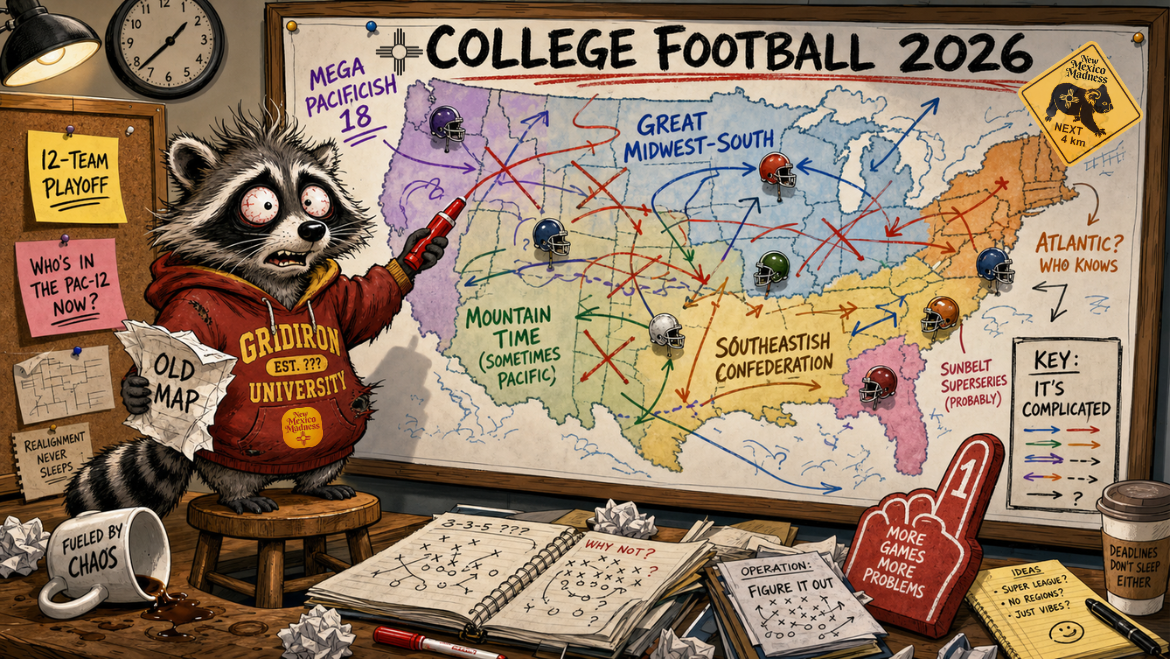
What didn’t change: realignment fever and geography denial
If you thought conference realignment would chill out once everyone got paid, that was adorable.
The Pac‑12, which briefly existed as a two‑team ghost conference, is rebooting with a new mix of Mountain West and Sun Belt refugees: Boise State, Colorado State, Fresno State, San Diego State, Texas State, Utah State, Washington State, and friends. The Mountain West, not interested in disappearing, is backfilling with its own additions – including UTEP and Hawaiʻi – to keep the late‑night kicks and weird travel itineraries alive.
For fans, that means:
- Even more late‑night games where the 4th quarter ends roughly when your alarm clock starts having hurt feelings.
- Road trips that make no geographic sense but perfect TV‑contract sense.
- Conference names that have completely detached from reality.
At this point, if someone can correctly place every new Pac‑12 and Mountain West member on a blank map, that person deserves automatic playoff consideration more than half the actual teams.
How New Mexico can enjoy the mess
College football has always been a time‑management crisis disguised as a sport, and the expanded playoff plus realignment chaos only make it louder.
The move to 12 teams means more fan bases get to stay emotionally invested deeper into the season. The heavyweights will still dominate, but there’s more room for hot streaks, late‑season redemption arcs, and that one “nobody believed in us” campaign that actually cashes.
For New Mexico, it’s permission to treat opening week as an event: one “must‑watch” showcase, one weird late‑night game, one eye on your Heisman futures, and a healthy appreciation for a map that now makes about as much sense as a trick play. College football didn’t get less messy in 2026. It just gave you more chances to enjoy the chaos before the NFL takes over your weekends again.
**Endnotes
- Basic 2026 start dates, Week Zero / Week 1 framework, and opening stretch schedule details.
- Neutral‑site opening games listed for the 2026 season (Aflac Kickoff in Atlanta, Lambeau and Nashville showcases).
- International opener in Dublin (TCU vs North Carolina) and New Mexico State at Florida State on opening weekend.
- Way‑too‑early 2026 Top‑25 rankings and national preview pieces slotting Ohio State, Oregon, Georgia, Notre Dame, Texas, Miami, and others near the top.
- 2026 Heisman futures and early‑season watch lists highlighting CJ Carr, Arch Manning, Dante Moore, Julian Sayin and other contenders.
- College Football Playoff’s confirmed expansion to a 12‑team format running through at least the 2026 season, including structure details.
- Coaches’ and conference discussions about possible 16‑ or 24‑team playoff formats and the idea of scrapping conference title games (proposals only, not implemented).
- 2026 conference‑realignment moves involving the rebuilt Pac‑12 (Boise State, Colorado State, Fresno State, San Diego State, Texas State, Utah State, Washington State) and Mountain West additions like UTEP and Hawaiʻi.
Always verify dates, times, and details with the venue, school, or official source before you go or bet. Schedules change; your bankroll and gas money do not.


