

New Mexico has joined 21 other states and the District of Columbia in a lawsuit challenging the Trump administration’s revised “public charge” rule. The policy would allow immigration officers to consider certain means-tested public benefits when deciding some green-card, visa and admission applications.
That is a legitimate national policy fight.
So is this: What are New Mexico’s priorities?
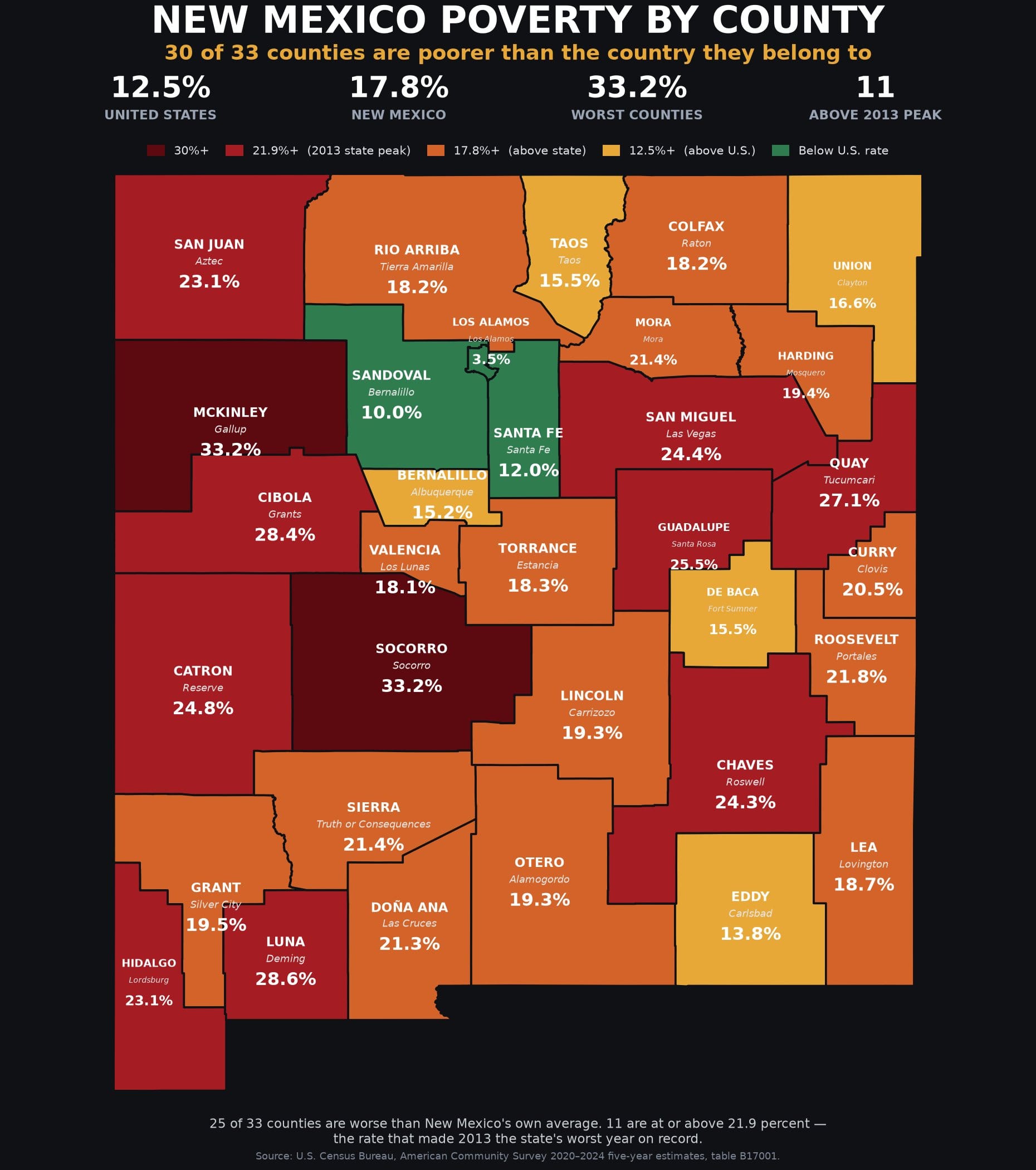
New Mexico’s overall poverty rate stands at 17.8 percent, compared with 12.5 percent nationally, according to the 2020–2024 American Community Survey five-year estimate. Thirty of the state’s 33 counties have poverty rates above the national rate.
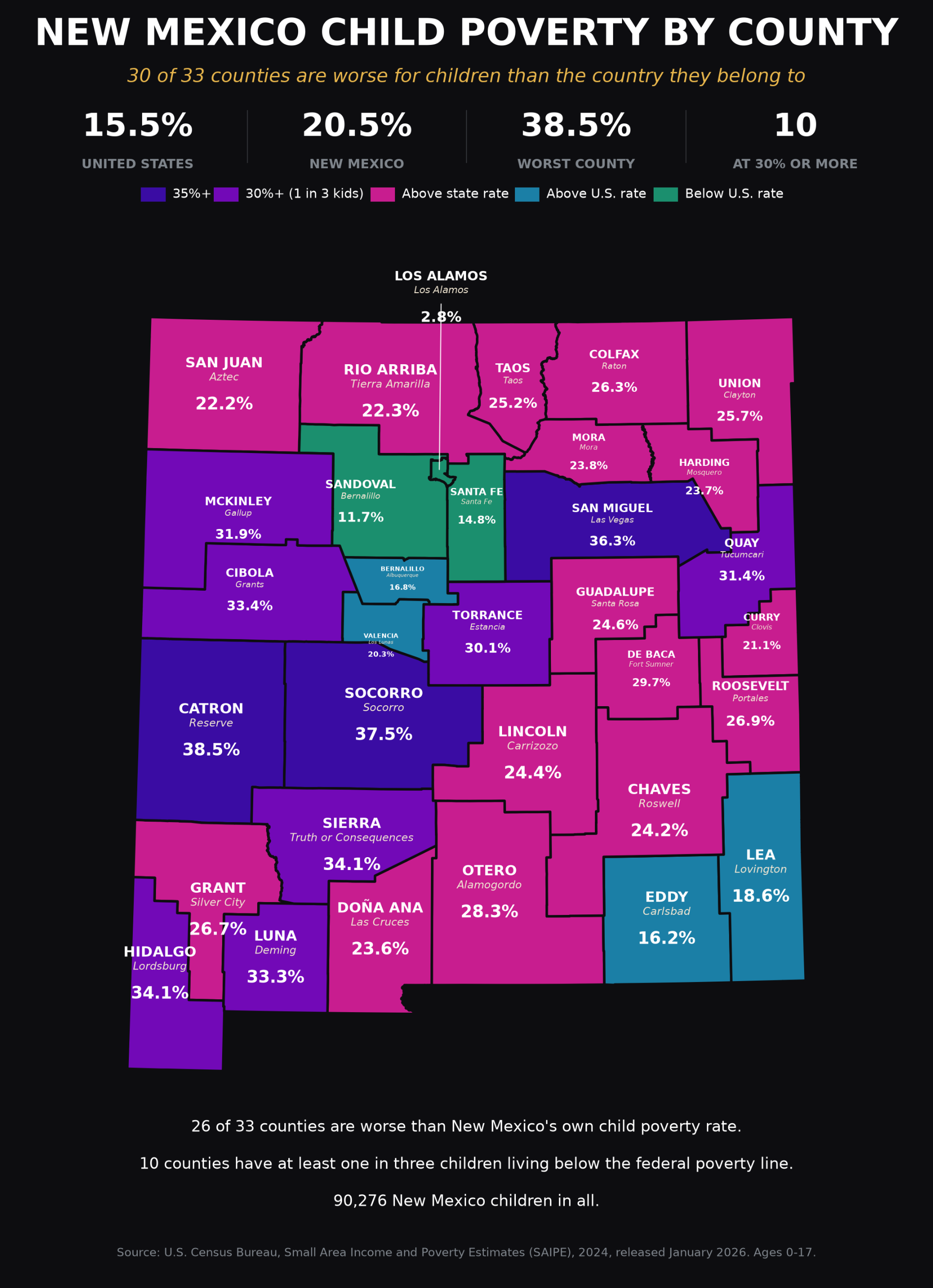
The picture for children is worse. New Mexico’s child-poverty rate is 20.5 percent, compared with 15.5 percent nationally. An estimated 90,276 New Mexico children lived below the federal poverty line in 2024. Ten counties had child-poverty rates of at least 30 percent.
Those are not just grim figures on a map.
They are parents working a second job and still coming up short on rent. They are families pushing a grocery cart with a calculator open on their phone. They are grandparents raising grandchildren. They are children growing up in homes where a broken water heater, an unexpected car repair or a trip to urgent care can upend an entire month.
Yet when Washington adopts an immigration policy that could count a noncitizen applicant’s use of taxpayer-funded assistance against a green-card decision, state attorneys general gather, coordinate and litigate.
New Mexico taxpayers have every right to ask: Where is that same urgency for us?
The public-charge lawsuit does not itself create a benefit, expand eligibility or order the state to issue a check to anyone. It seeks to block a federal immigration rule that would let officers weigh use of means-tested public assistance—such as food, housing or health-care assistance—when assessing whether some noncitizens should be admitted or granted lawful permanent residence.
The Trump administration’s argument is straightforward: people seeking permanent residence should demonstrate self-sufficiency rather than likely dependence on taxpayer-supported benefits. The states suing take the opposite view. They argue that the rule gives immigration officers excessive discretion and could discourage eligible immigrant families from using programs such as Medicaid, CHIP, food assistance and housing support.
That is the legal dispute.
But it does not erase the priorities question.
A New Mexican who is working two jobs, paying taxes and watching his or her own community struggle should not be expected to remain silent when state government devotes time, staff and public legal resources to a case whose direct immigration beneficiaries are noncitizens seeking green cards.
That concern is not automatically cruel, anti-child or anti-immigrant. It is a question of accountability.
New Mexico can treat every person with dignity. It can recognize that children should not be punished for choices made by adults. It can support legal immigration.
But New Mexico can also insist that public benefits funded by taxpayers should be limited, that self-sufficiency should matter in immigration decisions, and that the people already struggling here deserve a government that fights for them with equal force.
Where is the all-hands response for counties where roughly one in three children live in poverty? Where is the sustained urgency around wages that cannot cover housing, child care, insurance, food and transportation? Where is the statewide campaign matching the intensity of a multistate lawsuit to move New Mexico families from dependency to stability?
New Mexicans do not need another lecture about why they should not ask these questions.
They need leaders willing to answer them.
Before New Mexico spends more political capital fighting Washington over someone else’s path to a green card, it should show the people already here—working, paying in and struggling to get ahead—that their poverty emergency comes first.
Endnotes
- Reuters, “States, cities sue to block Trump immigration rule on public benefits,” Sept. 14, 2026. The report says New Mexico was among 22 states and D.C. challenging a DHS rule set to take effect Sept. 18 that would permit immigration officials to deny green cards to applicants using public benefits; the plaintiffs argue it exceeds DHS authority and violates the Administrative Procedure Act. reuters
- U.S. Census Bureau, American Community Survey, 2020–2024 five-year estimates, table B17001, Poverty Status in the Past 12 Months by Sex by Age. The overall-rate figures and county comparisons are displayed in the accompanying “New Mexico Poverty by County” graphic. ppl-ai-file-upload.s3.amazonaws
- U.S. Census Bureau, Small Area Income and Poverty Estimates, 2024 county and state data. The child-poverty rate, child count and county totals are displayed in the accompanying “New Mexico Child Poverty by County” graphic. ppl-ai-file-upload.s3.amazonaws
- U.S. Citizenship and Immigration Services, “USCIS Issues Guidance on Making Public Charge Inadmissibility Determination,” Aug. 17, 2026. USCIS says officers may consider means-tested public benefits received on or after Sept. 18, 2026, as part of an overall public-charge assessment. hafeykarim
- KANW, “States, including New Mexico, sue Trump administration over new green card restrictions,” Sept. 14, 2026. The report says the plaintiffs argue the rule could cause immigrants and their families to avoid public-benefit programs and could reduce federal Medicaid and CHIP transfers to states. kanw


